
The 2-Year Emirates ID Issued Under a Maid Visa in Dubai: Coverage and Renewal
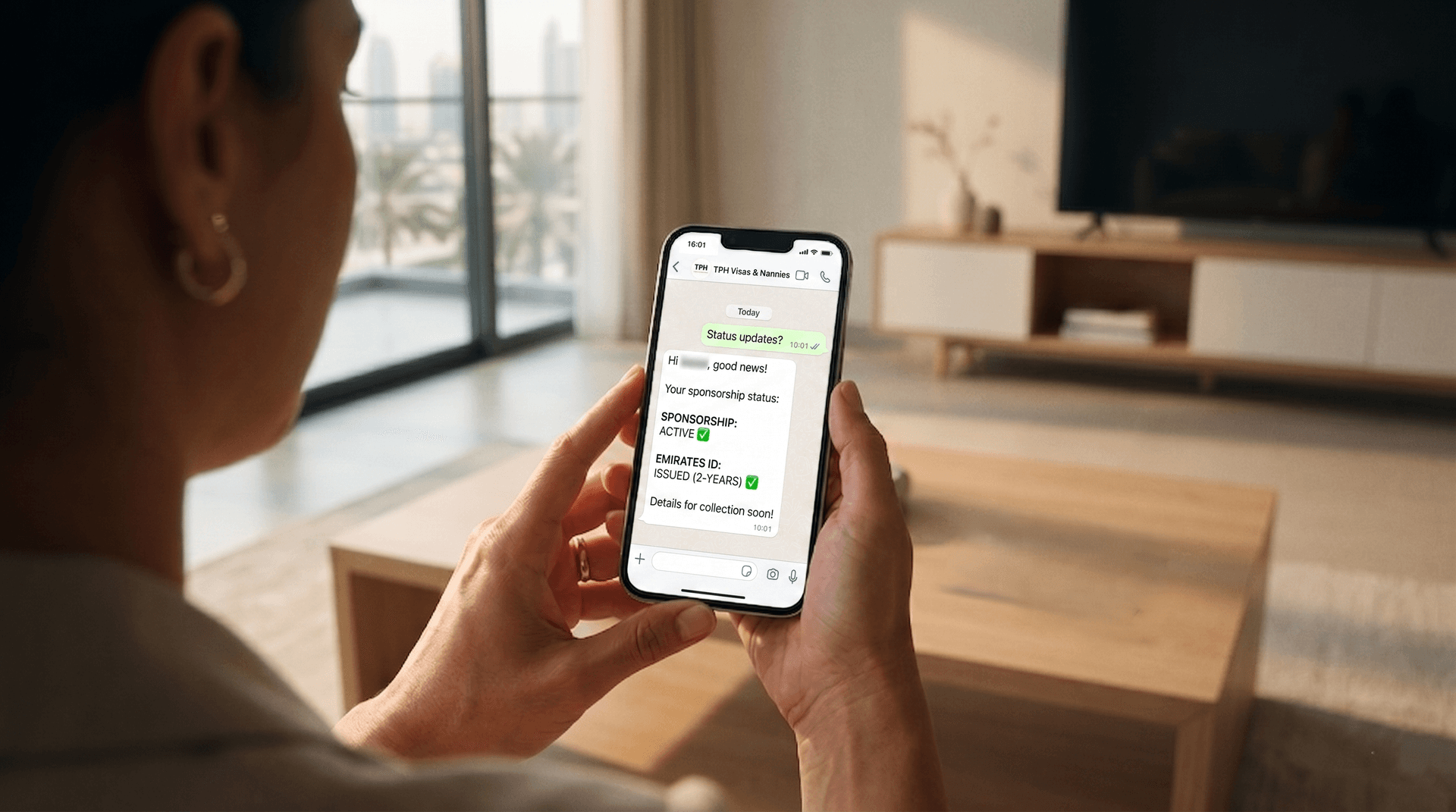
The Emirates ID card is one of the quieter components inside a maid visa in Dubai because it never appears as a separate line item on the quotation. It is bundled into the standard sponsorship fee and issued automatically after the medical fitness test clears. Most families only think about it when the card is misplaced or when the renewal cycle arrives. The maid visa sponsorship service includes the Emirates ID in its coverage. This article covers what the card actually does, how biometrics work, when renewal triggers and how TPH handles the administrative side.
The Emirates ID is a national identification card issued by the Federal Authority for Identity, Citizenship, Customs and Ports Security. Every UAE resident carries one regardless of employment status. A sponsored maid receives the same card as any other resident under her 2-year visa term. The card is her primary identification document inside the country alongside the documentation covered in the maid visa document checklist and replaces her passport for almost every day-to-day interaction from hospital visits to bank account management. The step-by-step guide to sponsoring a maid visa explains where the Emirates ID step sits inside the broader 7-day issuance window.
Why the Emirates ID Is Issued Alongside Every Maid Visa in Dubai
UAE law ties the Emirates ID directly to residency. Any person holding a residency visa must carry the card within the first few weeks of visa issuance. There is no exemption for domestic workers or any employment category. A sponsored maid under TPH receives her Emirates ID as part of the standard onboarding sequence rather than as a separate process the family has to arrange. The card links to her biometric record, her visa number plus her employment contract inside the federal system. The card becomes her single unified identifier across every UAE interaction.
The card is issued for the same 2-year term as the underlying residency visa. When the visa renews, the Emirates ID renews alongside it. When the visa is cancelled, the Emirates ID is cancelled as part of the closure. The two documents are linked in a way that removes any scenario where one is active without the other. Families running a maid visa in Dubai therefore do not need to track two separate expiry dates or renewal calendars. The single renewal moment handles both documents in one consolidated workflow inside the same maid visa in Dubai sponsorship account.
How the Biometrics Step Works After Arrival
The Emirates ID biometrics capture happens after the medical fitness test clears. The maid visits a government-approved biometrics centre where her fingerprints, signature and photograph are captured into the federal system. The appointment typically lasts around 15 minutes. TPH coordinates the appointment slot. TPH transports her from her arrival point to the centre. The family does not need to be present.
Once the biometrics are captured, the card production takes roughly 2 to 4 working days. The physical card is then delivered to the family's address or to the TPH office for handover. During that waiting window the maid can start working because her residency visa is already active inside the system. The physical card is confirmation of identity for future interactions. It is not required for her to begin household work. Families who need the card within the first few days for a specific purpose should flag that to TPH at the start.
What the 2-Year Card Actually Covers Under a Maid Visa in Dubai
The Emirates ID is the standard identification document across the UAE. It is used at hospital admissions, at pharmacy dispensation when prescription medicines are issued under her insurance, at bank account opening if she chooses to open an account plus at any government interaction where identity is being verified. The card encodes her biometric data and her residency status so that any accredited counter can verify her identity and her right to be in the country in a single scan.
The card also serves as proof of residency when she travels within the UAE, for example moving between emirates to visit her own network. It is not a travel document for international flights. Her passport remains the document for international travel. For domestic purposes inside the UAE the Emirates ID is accepted almost universally. The accommodation standards and employer duties walks through the broader employment context where her identity documents matter day to day.
The Emirates ID linked to a maid visa in Dubai stays in her possession. UAE law prohibits the employer from holding the card or using it as collateral for her continued employment. This is the same legal rule that applies to her passport. Both documents belong to her at all times. |
When the Emirates ID Renews Alongside the Maid Visa in Dubai
Renewal is triggered automatically when the underlying residency visa renews at the end of the 2-year term. The renewal does not require a separate Emirates ID application. The renewal fee is included inside the maid visa in Dubai renewal cost under TPH sponsorship. The biometrics capture may or may not be repeated depending on the current federal rules at the time of renewal. Under standard conditions the first renewal does not require a fresh biometric capture because the federal system already holds the record. Later renewals sometimes trigger a refresh.
Families renewing a maid visa in Dubai through TPH see the Emirates ID as a single consolidated line on the renewal quotation rather than a separate item. The mechanics of the renewal align with the original issuance: the maid visits the centre if biometrics are required, the card is produced and the physical handover follows. The maid visa renewal process walks through the full renewal flow including how the Emirates ID sits inside it.
What Happens If the Emirates ID Is Lost Under a Maid Visa in Dubai
A lost Emirates ID is a common event across the 2-year term and the replacement process is well established. The maid reports the loss to TPH through the family. TPH initiates a replacement application inside the federal system. A police report is sometimes required depending on the circumstances of the loss. TPH guides the maid through that step where needed. The application fee for a replacement card is modest and is paid through the standard sponsorship billing rather than as a separate out-of-pocket line for the family.
Replacement card production takes roughly the same 2 to 4 working days as the original card. During the waiting period the maid's residency status is unaffected because the status sits inside the federal database rather than inside the physical card. The card is simply the portable proof. Any verification that needs to happen during the waiting window can be confirmed through the federal system using her visa number. Families who sponsor a maid visa in Dubai through TPH therefore treat a lost card as an administrative inconvenience rather than a substantive disruption.
Why Private Sponsors Often Miss the Emirates ID Timeline
Under private sponsorship the family has to coordinate the Emirates ID biometrics themselves. The biometrics appointment has to be booked through the federal portal or through a typing centre. The family or a representative needs to accompany the maid. The physical card collection needs to be arranged once it is produced. None of these steps are difficult in isolation. They are easy to deprioritise under the pressure of other new-arrival logistics. The Emirates ID therefore often slips a week or two under private sponsorship.
A maid visa in Dubai held through the TPH agency sponsorship eliminates all of this administrative load because the agency runs the biometrics coordination, the appointment booking, the transport and the card handover. The family simply receives the card when it is ready as part of the standard maid visa in Dubai onboarding. The predictable rhythm of a maid visa in Dubai under TPH is one of the operational reasons families choose agency sponsorship even when the private route would technically be cheaper on paper. The extra four or five working days that private sponsors typically spend on biometrics coordination, card collection and appointment rescheduling rarely feature in the upfront comparison but they are the most common reason households switch to the agency model on their second hire. The admin saving often exceeds the headline fee difference once actual hours are counted. The hire a maid in Dubai step-by-step guide covers the broader agency-versus-private comparison.
Conclusion
The Emirates ID is the quiet counterpart to the residency visa inside a maid visa in Dubai. It is issued once, renewed alongside the visa, replaced easily if lost and kept administratively invisible to the family under TPH sponsorship. The card itself is central to her daily life in the UAE and tied legally to her not to the family. Families ready to discuss how the Emirates ID sits inside the broader sponsorship workflow can get in touch with TPH Visas and Nannies for a walkthrough of the end-to-end onboarding.
Frequently Asked Questions
Is the Emirates ID included inside a maid visa in Dubai sponsorship fee?
Yes. The Emirates ID is bundled into the standard sponsorship fee under a TPH-sponsored maid visa in Dubai. There is no separate line item for the card or the biometrics capture. The card is issued automatically after the medical fitness test clears.
How long does it take to get the Emirates ID after arrival?
Biometrics are captured within the first week of arrival after the medical fitness test clears. The physical card takes another 2 to 4 working days to produce and deliver. Residency is active from visa stamping so she can start working before the card arrives.
Who keeps the Emirates ID once it is issued?
The maid keeps her Emirates ID at all times. UAE law prohibits the employer from holding the card or using it as collateral. The same legal rule applies to her passport. Both documents are her personal identification and the family has no legal basis for retention under any circumstance.
What happens if the Emirates ID is lost during the 2-year term?
The maid reports the loss to TPH through the family. TPH files a replacement application in the federal system. A police report may be required depending on the specific circumstances. The replacement fee is modest and billed through the standard sponsorship channel.
Does the Emirates ID renew with the maid visa in Dubai at the end of the term?
Yes. Renewal is triggered automatically when the residency visa renews at the 2-year mark. The renewal fee is included in the TPH quotation. Biometrics may or may not need to be repeated depending on federal rules. The first renewal does not usually require fresh biometrics.
Is the maid required to carry the Emirates ID at all times?
Yes. UAE law requires any resident to carry the card during movement. Most sponsored maids keep the card safe at home and carry it when leaving the property for appointments, shopping trips or any scenario where identity verification may arise.
Can the Emirates ID be used for international travel?
No. The Emirates ID is a UAE identification card and functions as residency proof inside the country. It is not a travel document. Her passport remains the document for international travel. The card is accepted for domestic UAE travel but not for international flights.