
Nanny Visa for New Parents in Dubai: What to Know Before Hiring Infant Care
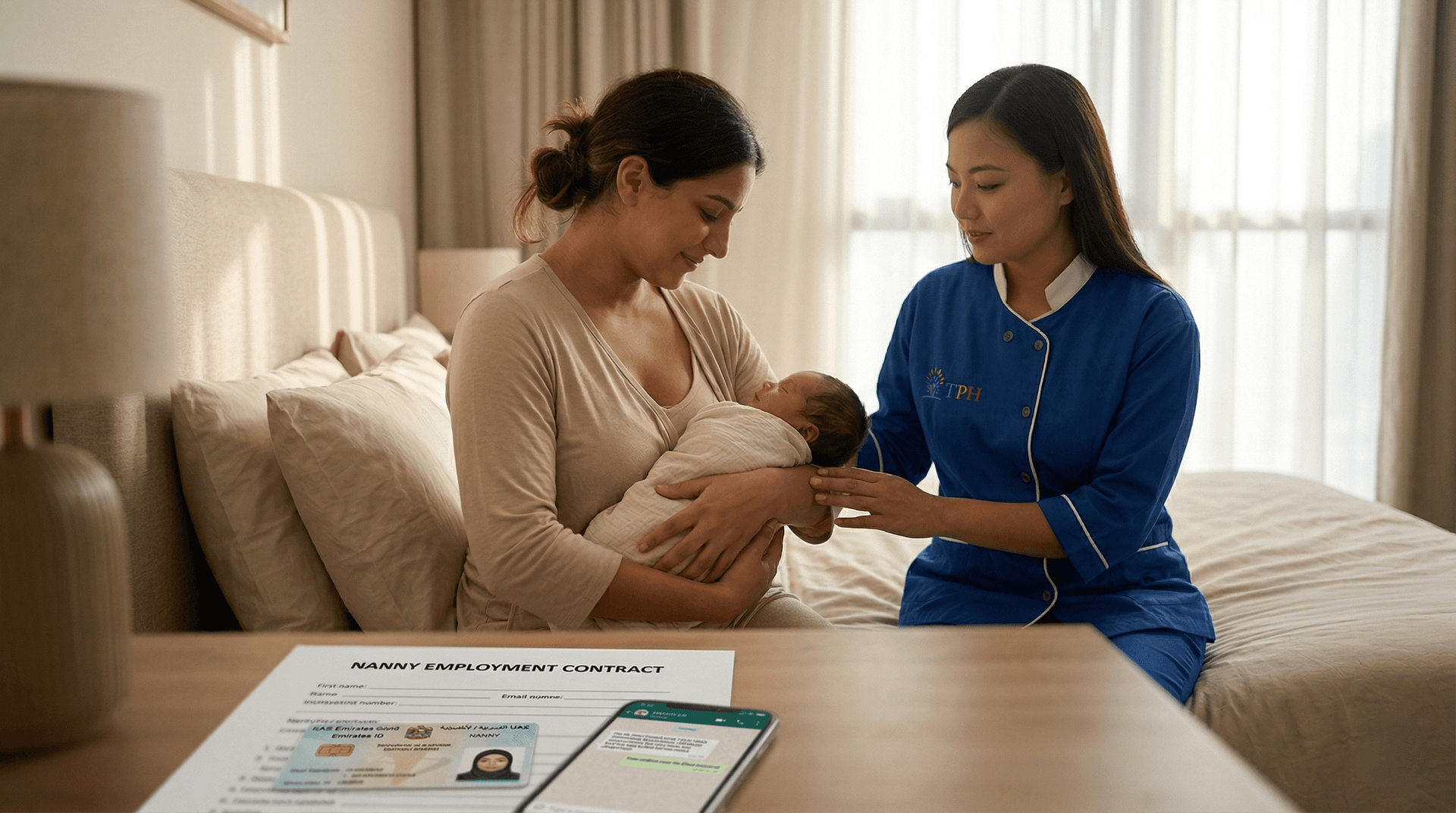
Bringing home a newborn changes the household in ways that are hard to anticipate. Many new parents discover within the first few weeks that managing infant care alongside work and daily life requires dedicated, full-time support. A nanny visa in Dubai is the legal framework that makes hiring that support possible but there are specific considerations for infant care that differ from hiring general household help.
This article covers what new parents need to understand before starting the process: why the nanny designation is the correct choice, what the medical requirements are for a nanny hired for infant care, the accommodation and rest entitlement framework and how TPH Visas and Nannies manages the entire process.
Why New Parents Need a Nanny Visa, Not a Maid Visa
This is the most common mistake new parents make. A nanny and a maid can look similar in a household context, both live in, both help with daily tasks but they carry different legal designations under MOHRE. A worker whose primary responsibility is an infant's care must be contracted under the nanny designation. Sponsoring her under a maid visa while she functions as a primary caregiver for a newborn creates a compliance mismatch that can result in labour disputes if the worker's duties and her legal contract do not align.
The rule is practical: if the majority of the worker's time is spent providing direct care for a child, feeding, bathing, monitoring and night waking, the nanny visa is the correct designation. If the majority of her time is spent on household management with incidental childcare, the maid visa applies. The legal distinctions between the two designations are worth understanding before any application is submitted.
Medical Test : Hepatitis B Requirement for Nannies Caring for Infants
For new parents, the Hepatitis B requirement is particularly relevant. All nannies must undergo Hepatitis B screening and vaccination as part of the medical fitness test. This is a MOHRE-specific requirement tied to the nanny designation and it exists precisely because of the sustained physical contact between childcare workers and the children in their care, contact that is especially intensive for infant and newborn care.
A nanny who tests negative for Hepatitis B but has no vaccination record may be required to complete the vaccination course before the visa is finalised. TPH ensures the correct medical protocols are applied for every nanny visa processed. The full medical screening requirements for domestic workers are documented for reference.
Night Waking and Rest Entitlements: What Families Need to Know
Under UAE Domestic Worker Law, all live-in domestic workers, whether on a maid or nanny visa, are legally entitled to 12 hours of total rest per day, including 9 continuous hours of night rest. For nannies caring for newborns, this creates a practical challenge. Infants do not follow predictable sleep schedules and night waking is a normal feature of newborn care.
Before hiring, families need to have a clear and honest conversation about how night duty will be structured. The legal entitlements around daily rest, weekly days off and annual leave apply regardless of the worker's role. TPH advises families to establish agreed rest schedules before the nanny arrives to avoid disputes arising from unrealistic expectations on either side.
Accommodation for a Live-In Nanny
All live-in domestic workers must be provided with decent accommodation that meets UAE Domestic Worker Law standards. For nannies from the Philippines specifically, a private room is a non-negotiable contractual requirement. For nannies from other nationalities, a private room is required if it is stated in the candidate's preference profile.
For families in smaller apartments with a newborn, this accommodation requirement is often the practical constraint that determines whether a live-in nanny is feasible. TPH confirms accommodation arrangements with families before deploying any candidate.
The Replacement Policy and Why It Matters for Infant Care
Compatibility between a nanny and a newborn's family is not always immediately apparent. A candidate who presents well may struggle with the specific demands of infant care once in the home. For new parents, the stakes of a poor fit are high.
For families using TPH's live-in nanny hiring service, unlimited free replacements are available. If the nanny does not work out for any reason, TPH manages the transition and provides a new candidate. The family does not pay new visa fees or restart the entire process from scratch.
How the Nanny Visa Process Works for New Parents
The process for new parents is the same as any nanny visa application through TPH. The family submits the nanny's passport photo, their Emirates ID and an IBAN screenshot for WPS setup. TPH handles the MOHRE designation confirmation, medical appointment, Emirates ID, insurance and visa stamping in approximately 7 days. No government visits are required.
Families who need to find a nanny before starting the visa process can use TPH's video profile system to select a pre-vetted candidate with verified infant care experience. TPH's team can also advise on which candidates have specific newborn and infant experience before the family makes a selection.
New parents ready to start the process can get in touch with TPH Visas and Nannies today.
Frequently Asked Questions
Does a nanny hired for newborn care need a nanny visa or a maid visa?
A nanny visa. If the worker's primary responsibility is direct infant care, feeding, bathing, night waking and daily supervision, the MOHRE nanny designation is the legally correct classification. Sponsoring a primary caregiver for an infant under a maid visa creates a compliance mismatch that can lead to labour disputes.
Is Hepatitis B screening required for nannies hired for infant care?
Yes. All nannies must undergo Hepatitis B screening and vaccination as part of the UAE medical fitness test. This requirement is tied to the nanny designation specifically and reflects the sustained physical contact between a nanny and the child in her care. TPH manages the complete medical process including this specific requirement.
What are a nanny's rest entitlements when caring for a newborn?
Under UAE Domestic Worker Law, all live-in domestic workers are entitled to 12 hours of total rest per day including 9 continuous hours of night rest, one full day off per week and 30 days of paid annual leave per year. These entitlements apply regardless of the nature of the childcare duties.
Does a nanny for a newborn need a private room?
For nannies from the Philippines, a private room is a mandatory contractual requirement. For nannies of other nationalities, a private room is required only if it is specified in the candidate's preference profile prior to hiring. All accommodation must meet UAE Domestic Worker Law standards for cleanliness and basic furnishing.
What happens if the nanny does not work out with the newborn?
For families using TPH's recruitment service, unlimited free replacements are available. If the nanny does not work out for any reason, TPH manages the transition and provides a new candidate at no additional visa processing cost.
How long does the nanny visa process take for new parents?
The same 7-day timeline applies. From the date documents are submitted, TPH processes the full nanny visa electronically, entry permit, medical, Emirates ID, insurance and WPS setup, in approximately 7 days with no government visits required from the family.
Can TPH help find a nanny with specific newborn care experience?
Yes. TPH maintains a pool of pre-vetted candidates with video profiles that include detail on each candidate's childcare background. The team can advise on which candidates have specific infant and newborn experience before the family makes a selection.