
Why a Full-Time Live-In Maid in Dubai Fits Dual-Income Working Couples Better Than Part-Time Arrangements
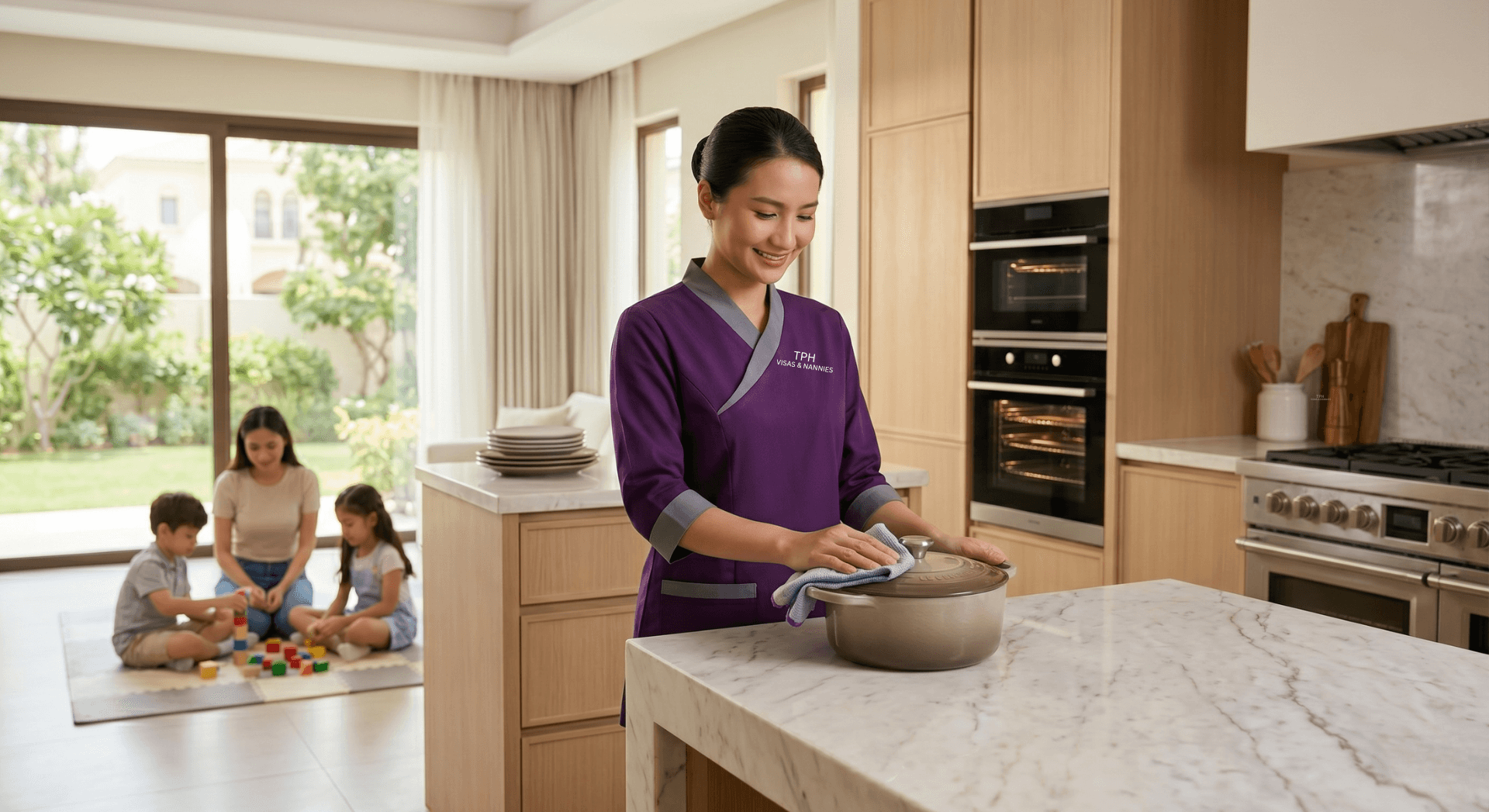
Dual-income working couples in Dubai run into a recurring household problem within the first year of moving to the city. The two professionals are working long hours often with travel commitments. Cleaning meal preparation laundry school logistics if there are children and weekend hosting all stack on top of work demand. The instinct of many couples in this audience is to start with a part-time helper a few hours per week and scale up if needed. The pattern that emerges six to twelve months later is consistent. The part-time arrangement runs out of capacity and the household either escalates to a full-time live-in maid in Dubai or burns out. The live-in maid hiring service is the configuration most dual-income couples eventually settle on.
This article documents why the part-time-first instinct typically fails this specific audience and what a full-time live-in maid in Dubai engagement actually delivers in time recovered and coverage breadth. The published library covers how to hire a maid in Dubai under the 2026 step by step guide and the hire a maid service page covers the engagement structure. This piece focuses on the workload economics that make the live-in configuration the cleaner answer for dual-income households.
What a Live-In Maid in Dubai Workload Looks Like Inside a Dual-Income Household
A typical dual-income working couple in Dubai runs a household that needs roughly thirty to forty hours of domestic work per week to function smoothly. This figure is not a precise measurement. It is the cumulative time of cleaning meal prep laundry shopping coordination school runs if applicable and the smaller tasks that disappear into household friction. A part-time arrangement of ten to twelve hours per week covers about a third of this workload. The remaining two-thirds of the work either falls back on the couple themselves or accumulates as visible disorder around the home. Couples who run this configuration for six months consistently report that they spend their evenings and weekends doing residual household work rather than recovering from the work week.
A full-time live-in maid in Dubai engagement covers the full thirty to forty hour workload directly because the helper is in the home throughout the working day handling tasks as they arise rather than batching them into a fixed window. The live-in configuration also handles the early morning and late evening windows that part-time arrangements do not cover. Breakfast preparation school lunch packing if children are in the household and dinner preparation all happen inside time blocks that part-time helpers are not present for. The live-in arrangement closes these coverage gaps without the couple needing to add their own time.
The Time-Recovery Economics of a Live-In Maid in Dubai for Working Couples
The pure time recovery from a live-in arrangement for a dual-income couple typically lands between fifteen and twenty hours per week. This is the time the couple was previously absorbing into their own evenings and weekends through cooking cleaning errand running and laundry. Recovered as personal time the fifteen to twenty hour figure compounds over a month into roughly sixty to eighty hours. Most couples convert this recovered time into a mix of rest social engagement extended professional capacity and child interaction time if they have children. The recovered time is the actual return on the engagement fee.
The cost framing matters here. A full-time live-in maid in Dubai under agency sponsorship runs at AED 2,390 per month bundled. The recovered fifteen to twenty hours per week translates the cost into roughly AED 30 to 40 per recovered hour. For dual-income professionals whose own time is valued well above this rate the engagement is materially positive economically. The full time maid hiring service engagement covers this configuration and the cost breakdown for a maid visa article walks through the comparable direct sponsorship path.
Why Part-Time Arrangements Fail Where a Live-In Maid in Dubai Succeeds
Part-time arrangements work for households whose domestic work is heavily concentrated into a few specific tasks like a weekly deep clean and laundry. They struggle when the workload is distributed throughout the day in small recurring tasks. A dual-income working couple with breakfast cleanup lunch prep school pickup grocery handling dinner prep and laundry across the day is in the second category not the first. The part-time helper arrives for a fixed window does the tasks that fit inside that window and leaves. Everything that falls outside the window stays on the couple.
The second failure mode is scheduling. Part-time helpers typically work for multiple households and the schedule is fixed weeks in advance. A working couple with travel commitments work emergencies or unexpected social demands cannot reliably shift the helper's window. The helper's time is shared with other clients. A full-time live-in maid in Dubai engagement is single-household by design which means the schedule shifts with the couple's actual week rather than being locked in. This responsiveness is the second structural advantage of the live-in configuration.
Coverage Gaps That a Live-In Maid in Dubai Closes Specifically
The early morning window between five and seven in the morning is often where the day's friction starts. Breakfast preparation school lunch packing dressing assistance for younger children and the morning tidy fall into this window. Most part-time helpers are not present for this. A live-in maid in Dubai handles it directly. The mid-morning to early afternoon block is when the household gets reset. Beds made bathrooms cleaned floors mopped laundry started and groceries managed. A part-time helper might cover one or two of these. A live-in covers all of them as a default rhythm.
The evening window between five and eight at night is the second high-friction block. School pickup if children are in the home homework support meal preparation table setting and after-dinner cleanup all stack into this window. Working couples who arrive home from office at six or seven typically face an unrecovered evening workload without live-in support. A live-in arrangement absorbs this entire block. Couples then arrive to a calm home with the evening already structured. The live-in vs live-out comparison piece covers the structural difference between the two configurations.
A full-time live-in maid in Dubai delivers fifteen to twenty hours of recovered personal time per week to a dual-income working couple at a cost of roughly AED 30 to 40 per recovered hour under agency sponsorship. The economics are materially positive for any couple whose own time is valued above this rate. |
Why the Six to Twelve Month Pattern Pushes Couples to a Live-In Maid in Dubai
Couples who start with part-time arrangements typically push through the first three to four months on adrenaline and the sense that they are figuring out the new city's domestic rhythm. By month six the work week has caught up with them. By month nine the part-time arrangement is visibly under-delivering. By month twelve most couples have either escalated to a live-in maid in Dubai engagement or are seriously researching one. The six to twelve month pattern is consistent enough across this audience that TPH typically suggests skipping the part-time phase entirely if the couple's profile fits.
Couples who skip the part-time phase save themselves the first year of attempted workarounds and the residual disorder that builds up across that period. The downside of skipping is committing to a higher monthly engagement before the household is fully sure they need it. The mitigation is the trial period inside the first three months which gives both the family and the candidate a structured off-ramp if the configuration is not the right fit. The hire a maid step by step guide explains how the trial structure works inside the engagement window.
How a Live-In Maid in Dubai Engagement Adapts as a Couple's Life Changes
A dual-income couple who engages a live-in maid in Dubai typically goes through one or two life events during the engagement window. A first child a relocation within the city to a larger home an extended professional travel assignment or a parent visiting for an extended stay. The live-in configuration absorbs each of these without a structural change to the engagement. The same helper covers the additional workload that comes with each event because she is already inside the household rhythm. A part-time arrangement would typically need a renegotiation of hours and rates at each life event which adds friction to an already busy period.
The transition into parenthood is the most common life event during the engagement. The workload shifts toward childcare adjacent tasks like infant feeding preparation laundry volume and night-time tidying. The live-in maid in Dubai handles these tasks in the same way she handles the pre-baby workload because she is already integrated into the home. Couples who try to shift from part-time to live-in at the moment of childbirth typically struggle with the timing because placement takes weeks. Couples who have a live-in already in place absorb the transition smoothly. The full-time maid hiring engagement structure handles this transition without paperwork changes.
Conclusion
Dual-income working couples in Dubai eventually arrive at a full-time live-in maid in Dubai configuration because the workload economics push them there. The part-time route delivers partial coverage that fails as the work week intensifies. The live-in route delivers full coverage and recovers fifteen to twenty hours per week. Couples thinking through the decision can get in touch with TPH Visas and Nannies for a household-specific walkthrough on whether their profile fits the live-in model directly.
Frequently Asked Questions
How many hours per week does a dual-income household need?
A typical dual-income working couple household runs roughly thirty to forty hours of domestic work per week. The figure covers cleaning meal preparation laundry shopping school coordination if children are in the home and the smaller tasks that absorb into household friction across the day.
Why does part-time fail dual-income couples?
Part-time arrangements cover about a third of the household workload. The remaining two-thirds either falls back on the couple or accumulates as disorder. Part-time helpers also work fixed windows shared across multiple clients which cannot flex with a working couple's actual schedule of travel and irregular evenings.
What is the cost of a full-time live-in maid in Dubai?
Under agency sponsorship through TPH a full-time live-in arrangement starts at AED 2,390 per month bundled. The fee covers the visa insurance gratuity and all sponsor-side compliance. Direct household sponsorship has a different cost profile with higher upfront fees and lower recurring monthly cost over the two year visa duration.
How much time does a live-in arrangement actually recover?
Most dual-income couples recover fifteen to twenty hours per week of personal time after a live-in maid in Dubai is engaged. Across a month this compounds into roughly sixty to eighty recovered hours. Couples typically convert this into rest social engagement extended professional capacity and family interaction time.
Should couples start part-time first to test the need?
Most couples who start part-time end up at full-time live-in within six to twelve months. TPH suggests skipping the part-time phase if the couple's profile fits. The trial period in the first three months provides a structured off-ramp if the configuration is not the right fit.
What about couples who travel frequently for work?
The live-in configuration is well suited to couples with frequent travel because the helper is in the home regardless of the couple's location. Mail receipt home security routine maintenance and food preparation continue while one or both partners are travelling. A part-time helper cannot provide the same continuity.
Does the live-in arrangement work for couples without children?
Yes. The workload is different from a household with children but the time recovery is similar. Couples without children typically use the recovered time for professional capacity social activity travel preparation and rest. The configuration suits the couple's specific routine rather than being limited to family households with childcare needs.